

A Family Story at the Crossroads of History
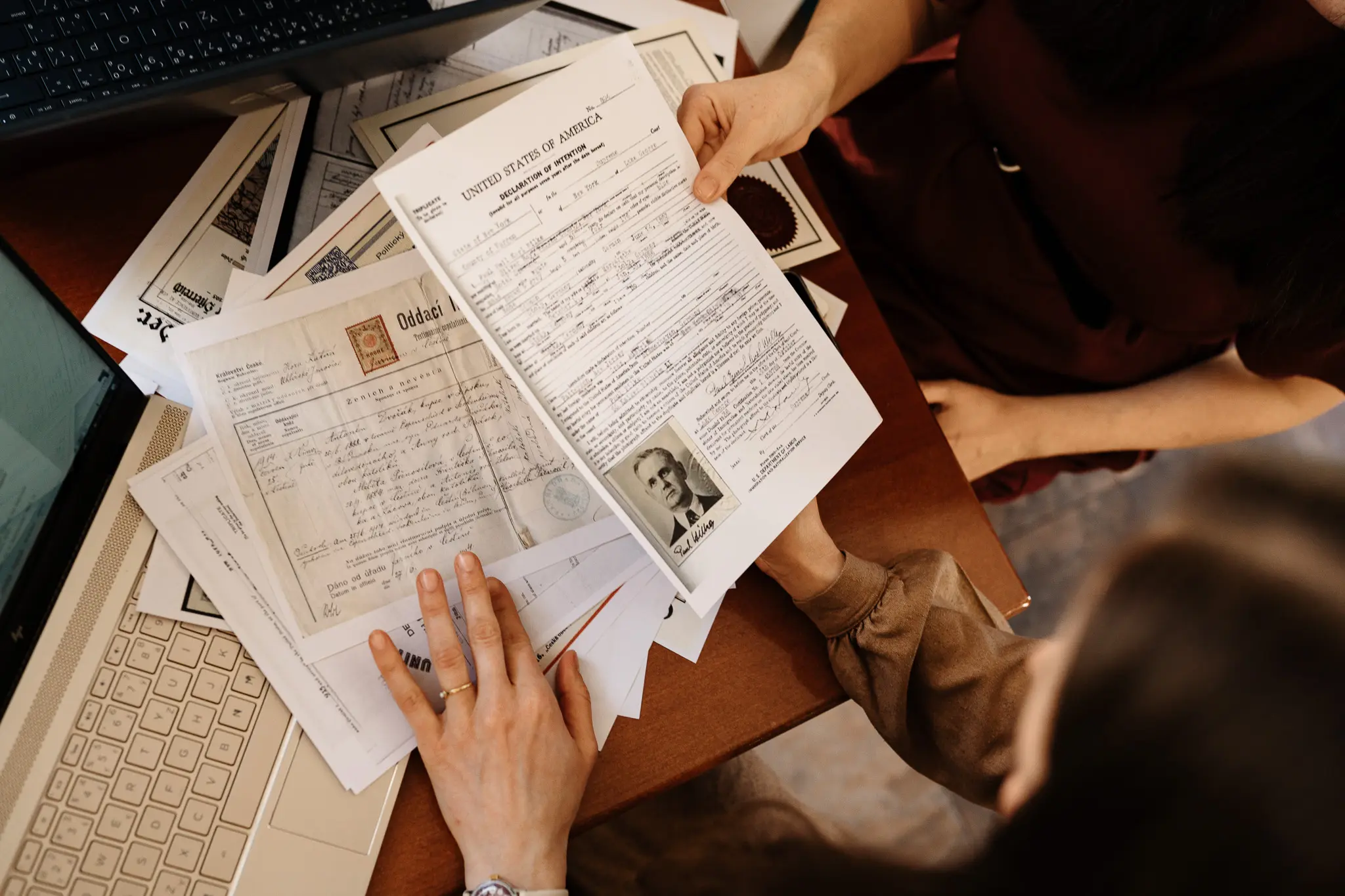
In May 1945, the client’s grandmother married a British soldier. Shortly after the wedding, her husband returned to the United Kingdom, and in August 1945 she was evacuated to Britain through the British Embassy in Prague. Their daughter – the client’s mother – was later born in the UK.
Hidden Complications Along the Way
Even though losing Czechoslovak citizenship by marrying a foreign national may establish a claim to Czech citizenship by descent, the case soon revealed a serious complication. There were strong signs that the client’s grandmother was of German nationality – she had a German-sounding name and came from the Sudeten region, which was annexed by Nazi Germany in 1938. This raised a significant risk that she could belong to a group of citizens who were stripped of their Czechoslovak citizenship based on the Beneš Decrees.
If her Czechoslovak citizenship had been lost under the Beneš Decrees, the path to Czech citizenship for her descendants would have been definitively closed.
An Unexpected Turning Point
But then, during one of the consultations of the case with the relevant Citizenship Office, we have coincidentally found out that the client’s cousin had already applied for Czech citizenship based on the same grandmother. That was a truly fortunate coincidence since the client had no contact with this relative for a very long time. However, the archival search took several months, before finally, we learned that the cousin’s application had been approved.
Because the cousin’s claim was based on an identical factual and legal foundation, this precedent fundamentally changed the situation. The authorities concluded that the grandmother could not have lost her Czechoslovak citizenship under the Beneš decrees because, at the time the decrees were issued, she was no longer a citizen. She lost her Czechoslovak citizenship and became a British citizen through her marriage to a British soldier, client’s grandfather. The marriage took place a mere two months before the Beneš decrees became effective. This proved to be a close call in terms of eligibility, arising from a personal story that brought together individuals from opposite sides of a divided Europe.
A Fast and Successful Outcome
From the moment we learned about the successful application of the client’s cousin, the process accelerated rapidly. The client himself contributed significantly by obtaining all the required documents to support his application in record time. Once the application was filed in Prague, his Citizenship Certificate was issued within just one week.
That is absolutely fantastic, thank you so much! Excited for the next steps.Thank you for all your efforts on this!
This case shows that even when a matter initially appears very risky or even close to hopeless, the final outcome may be very different. With a detailed understanding of the citizenship framework and historical context, seemingly closed paths can sometimes reopen. If you are seeking to untangle your own family history in connection with Czech citizenship, Czechwise will be glad to help.
Picture designed by Freepik