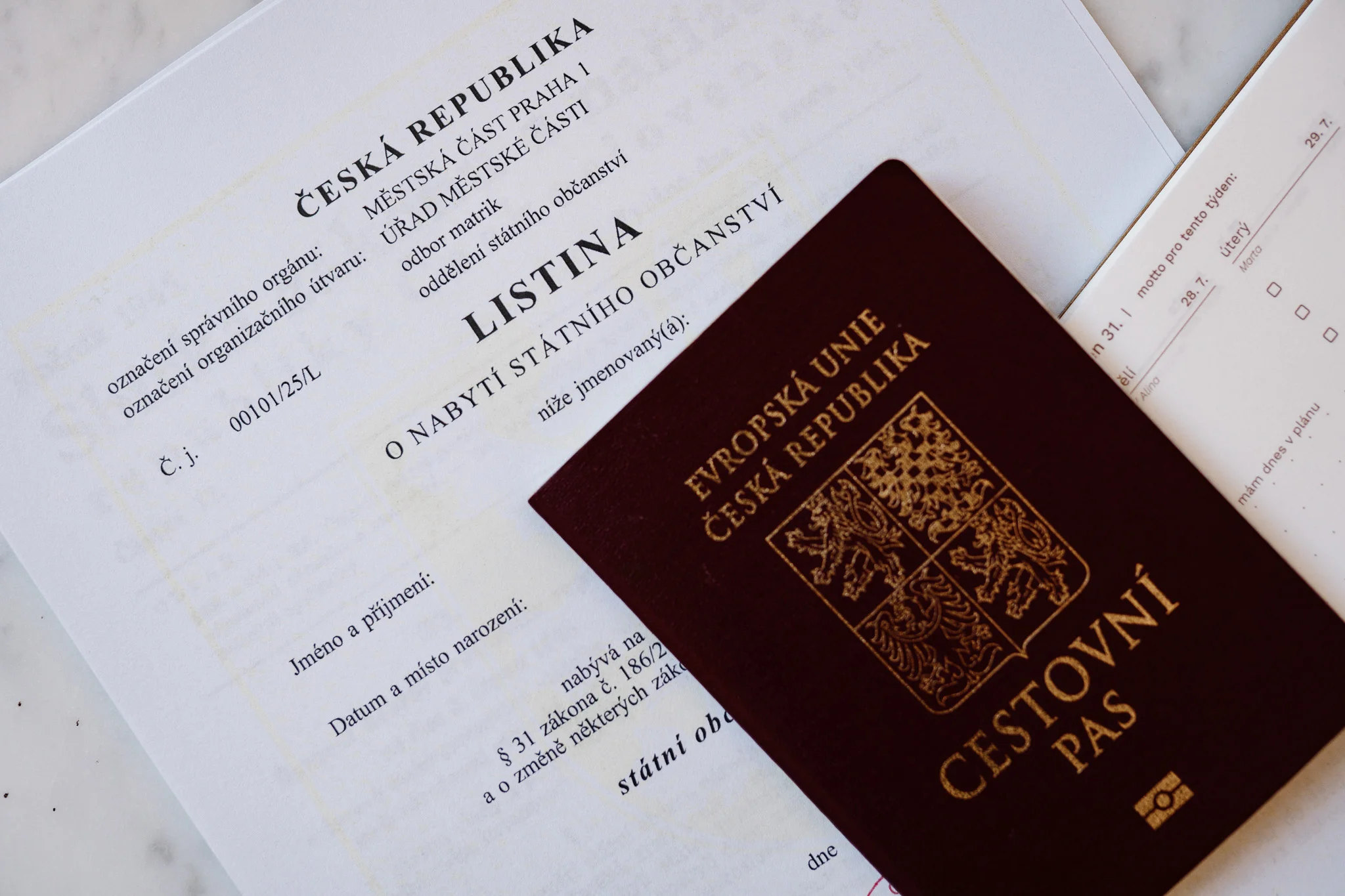

Client’s grandmother, born in the United States and who never set foot in Europe, was still a Czechoslovak citizen. This surprising reality became the foundation of our client’s successful Czech citizenship application, even though she was a third-generation descendant of the last ancestor born in the territory of today’s Czech Republic.
Czechoslovak Roots in South Moravia
The client’s Czech great-grandfather left for the U.S. in 1909, well before Czechoslovakia was established. That same year, the client’s grandmother was born in the United States. The great-grandfather was born in a small village in South Moravia in 1883. He later emigrated to the United States and naturalized there in 1922.
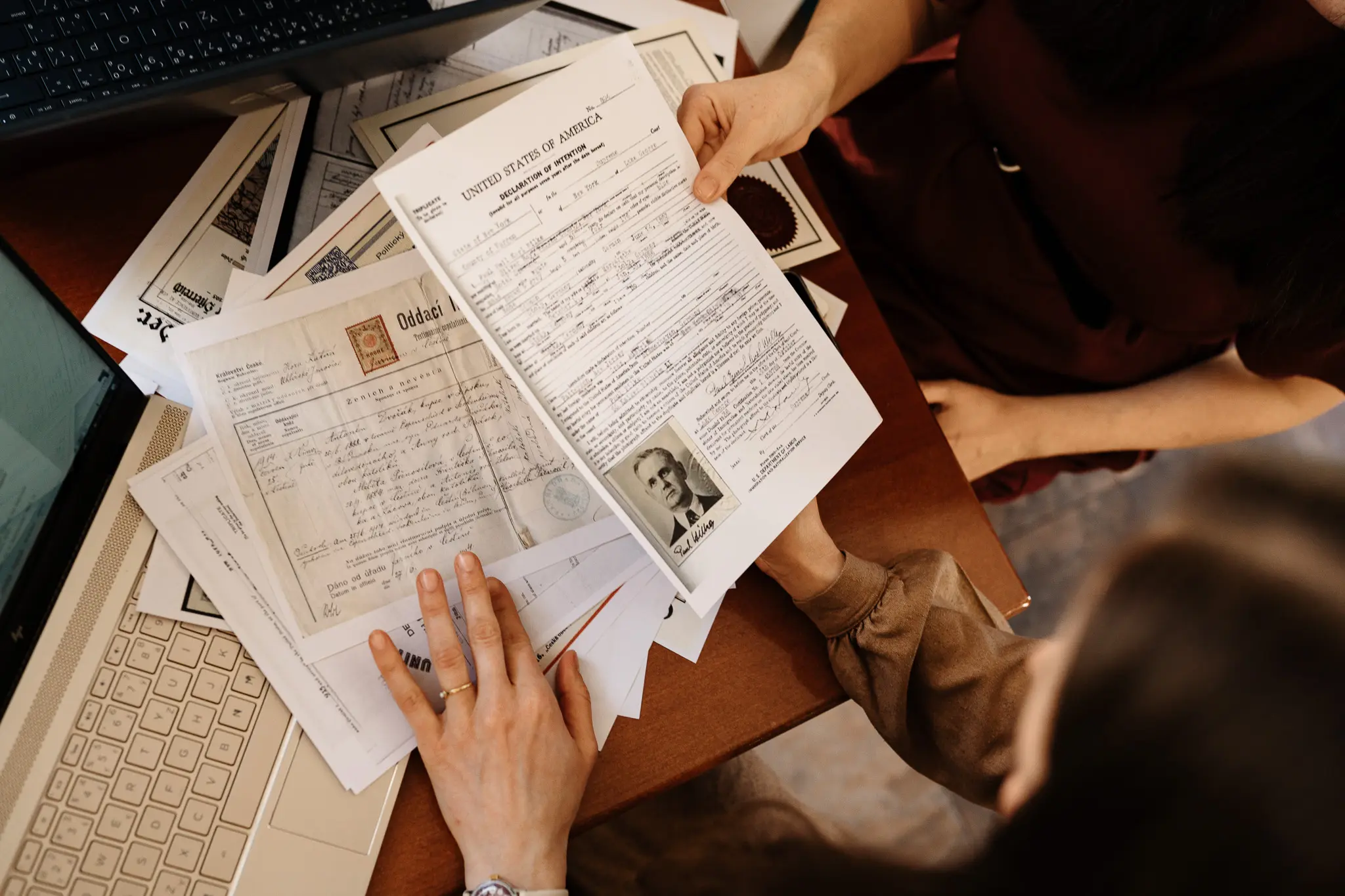
Through extensive archival research, we secured historical records proving that before his emigration, he held domicile rights in the territory that later became Czechoslovakia. These rights were crucial. Under the rules at the time, they determined who became a citizen of the newly established Czechoslovakia, even if the person no longer lived there.
Our team located key documents in the Czech archives, including:
- birth records
- marriage records
- official domicile registration
I can’t believe it. I had been searching for those documents for years, and you found them in just a month.
These materials turned a family story into a clear and well-supported case.
Czech Citizenship Without Ever Visiting Europe
The client’s grandmother was born in Texas and lived her entire life in the United States. She never visited Czechoslovakia.
However, based on our initial assessment, she likely acquired Czechoslovak citizenship through her father’s domicile rights in 1918. This created a case of dual citizenship at a time when it was not common. She likely never knew she held Czechoslovak citizenship at all.
Loss of Citizenship Through Marriage
Later, the grandmother married an American citizen.
At that time, women often lost their original citizenship when marrying a foreign national. Based on our analysis, this likely applied in her case as well. This detail became crucial.
Because she both acquired and later lost Czechoslovak citizenship, it opened a path for her descendant to apply for Czech citizenship, even as a third-generation descendant from the last ancestor born in the Czech lands.
From Family History to Czech Citizenship
The key question was: Did the grandmother acquire Czechoslovak citizenship in 1918 and when exactly did she lose it?
To confirm this, we first applied for official confirmation of her historical citizenship status. A few months later, authorities confirmed our conclusions.
Result: Our conclusions were confirmed, and our client qualified for Czech citizenship by descent.
This is great news! I’m so excited!
What This Means for You
This case shows that Czech citizenship by descent may be possible even if:
- your ancestors emigrated over 100 years ago
- your family has lived outside Europe for generations
- your relatives never held Czech documents
Even third-generation descendants from the last Czech-born ancestor may still qualify.
Thinking About Your Eligibility?
Contact us for an initial assessment and find out if you may qualify for Czech citizenship. We specialize in:
- archival research in Czech records
- complex family cases across multiple generations
- guiding clients through the entire process