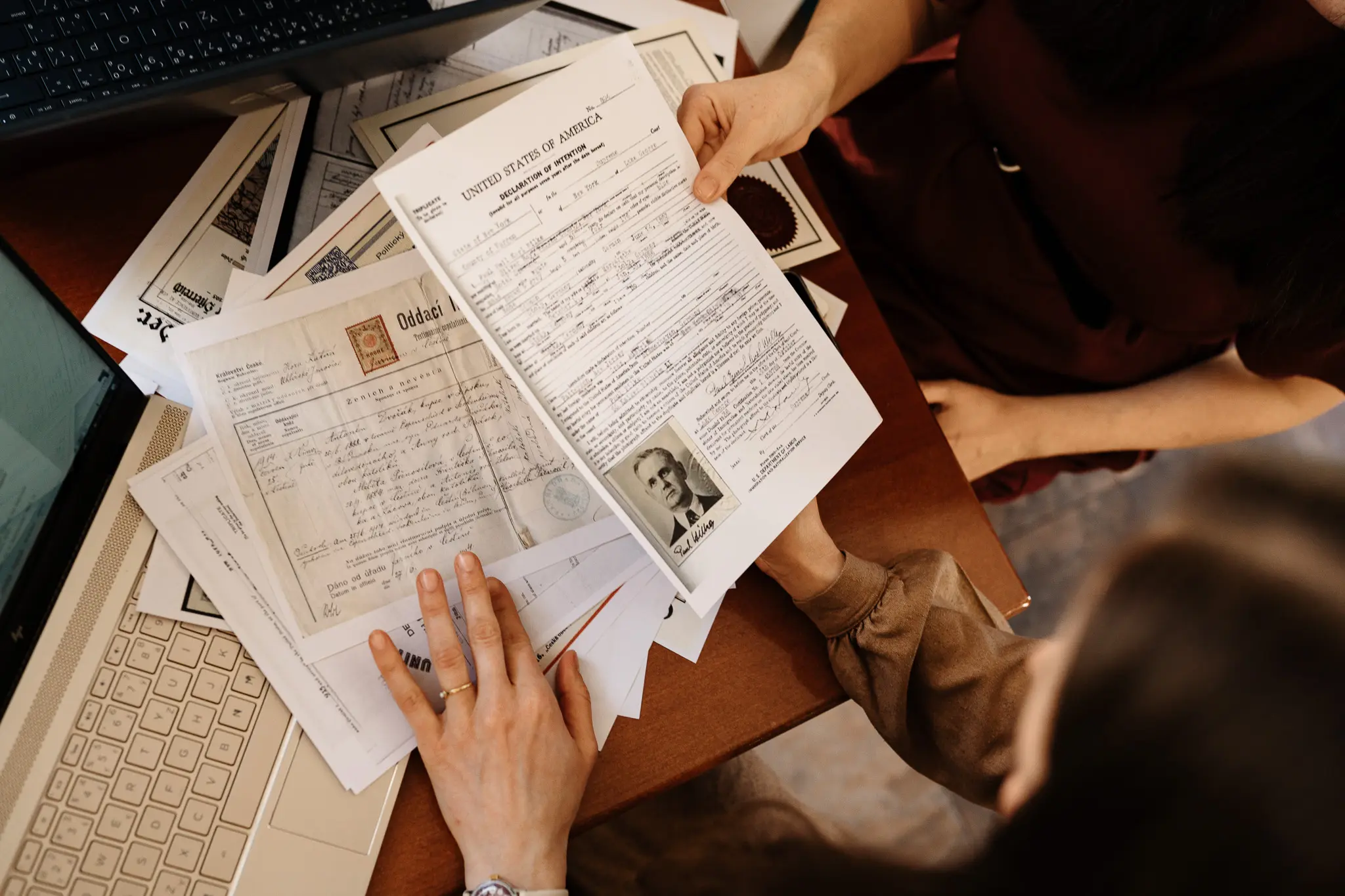

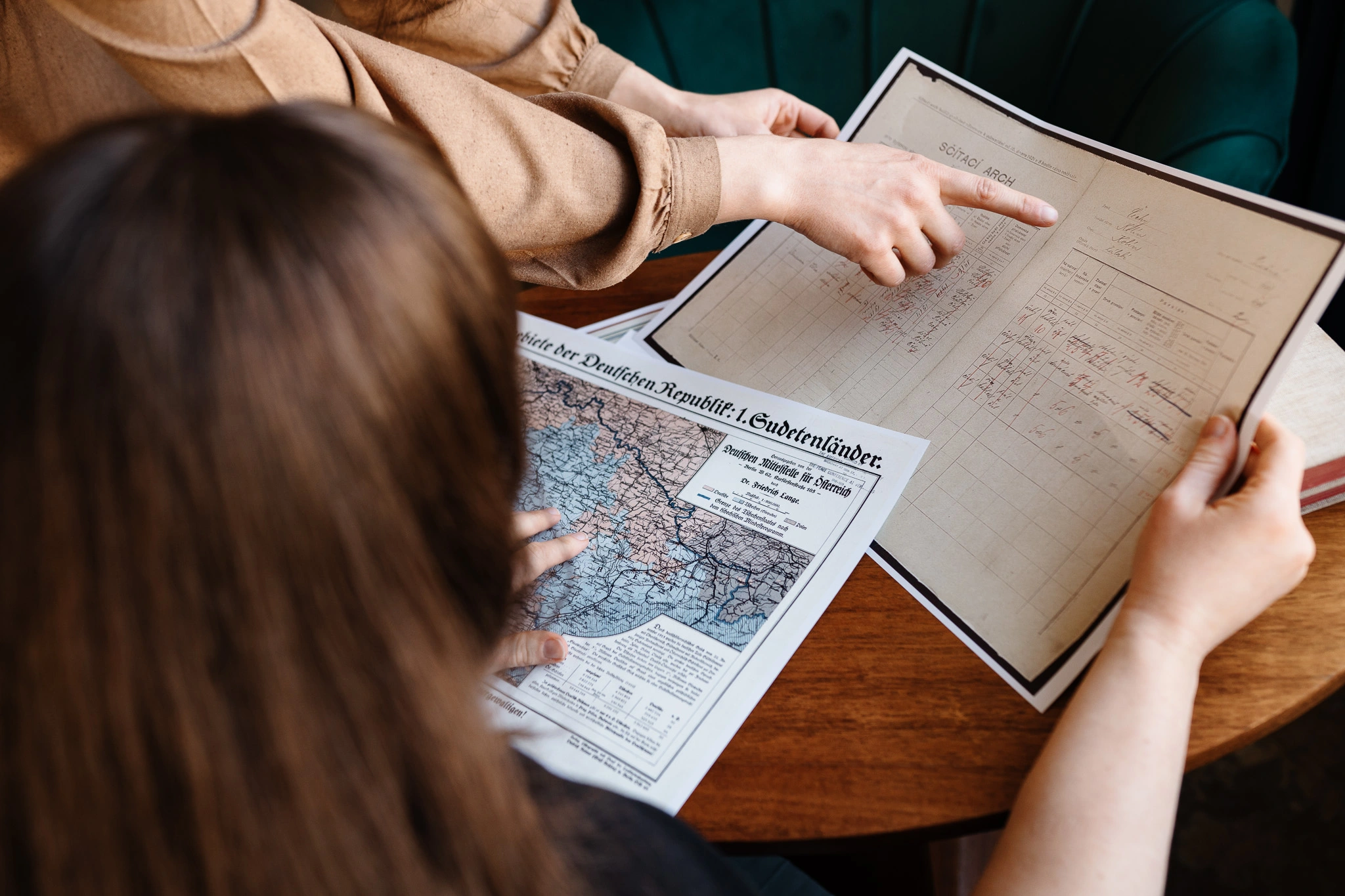

Many people begin their journey to Czech citizenship by submitting an application through a consulate or an embassy. Consulates primarily serve as a place where applications are received and forwarded to the authorities in the Czech Republic. They do not prepare the legal explanation of the claim itself. But when a case is prepared in advance, and the applicant’s Czech ancestry and legal entitlement are clearly explained to the authorities, the review process can be significantly faster.
Searching for Czechoslovak Roots Across Borders
One of our recent cases began with a client who had spent years researching his family history. His late mother was born in 1932 in Subcarpathian Ruthenia, a region whose borders and administrations changed repeatedly during the 20th century.
After the Second World War, she lived in what is now the Czech Republic. As a young orphan, she attended school in several towns in northern and western Bohemia. In 1948, at only fifteen years old, she left Europe and later settled in Canada.
Many decades later, her son began exploring whether this family history could allow him to obtain Czech citizenship by descent. Like many people with Czechoslovak roots, he started by searching archives and collecting documents that could help reconstruct his mother’s life in post-war Czechoslovakia.
The search took several years.
Applying for Czech Citizenship Through a Consulate
After gathering the available documentation, the client applied for confirmation of Czech citizenship through the Czech Consulate in Toronto.
For applicants living abroad, this is often the most accessible option. Consulates act as the official place where applications are formally submitted and then forwarded to the local authorities in the Czech Republic (usually the Prague 1 “Matrika”), which makes the final decision.
While consulates can help ensure that the application is formally complete, they do not prepare the legal explanation of the claim or reconstruct a complex family history for the authorities reviewing the case. In cases where the applicant’s Czech ancestry involves migration, war, or missing historical records, this explanation can play an important role in how efficiently the application is reviewed.
Years of Research and Waiting
The client spent several years locating archival materials and reconstructing parts of his family history before submitting the application.
After the submission, the administrative process itself continued for several more years. During the proceedings, the authorities requested additional documents, and the case was temporarily suspended while related questions were being examined.
Why the Explanation Matters
Applications for Czech citizenship are evaluated by authorities in the Czech Republic who must interpret historical records through the framework of citizenship law.
In many situations, the outcome does not depend only on the documents themselves but also on how clearly the claim is explained. When the legal reasoning and family history are well structured, authorities can review the case much more efficiently.
In our experience, carefully prepared applications that clearly document Czech ancestry and explain the legal basis of the claim can sometimes be approved very quickly once they reach the relevant authority.
When applications are submitted without this type of explanation, officials must reconstruct the story themselves from the documents. This naturally requires more time and can lead to additional questions or delays.
Sometimes a Clear Answer Is the Most Valuable One
When the client eventually contacted our team, he asked whether there were further steps he could take after receiving the decision.
After reviewing the available documents and the historical context of his mother’s case, we explained during the first consultation that, under the current legal framework, his claim to Czech citizenship was unfortunately not likely to succeed.
Although this was not the answer he had hoped for, he appreciated having a clear and honest explanation. After years spent researching family history and waiting for the outcome of the administrative process, he finally had certainty and did not have to spend additional years pursuing a path that was unlikely to lead to a different result.
Sometimes the most important part of exploring Czech ancestry is understanding what the law actually allows and where the limits are.
Exploring Your Czech Ancestry
Many people begin their journey toward Czech citizenship by collecting family documents or submitting an application through a consulate. In some cases, that is enough.
But even relatively straightforward cases can benefit from careful preparation. At Czechwise, we help clients document their Czech ancestry, arrange translations, structure the legal explanation of the claim, and submit applications directly in the Czech Republic while communicating with the authorities throughout the process.
Sometimes the difference lies not only in whether a claim exists, but also in how clearly the story behind it is presented. And sometimes, a professional review at the beginning can save years of uncertainty later.
If you are exploring your own Czechoslovak roots and wondering whether Czech citizenship might be possible in your case, our team would be happy to review your family history and help you understand the options available.