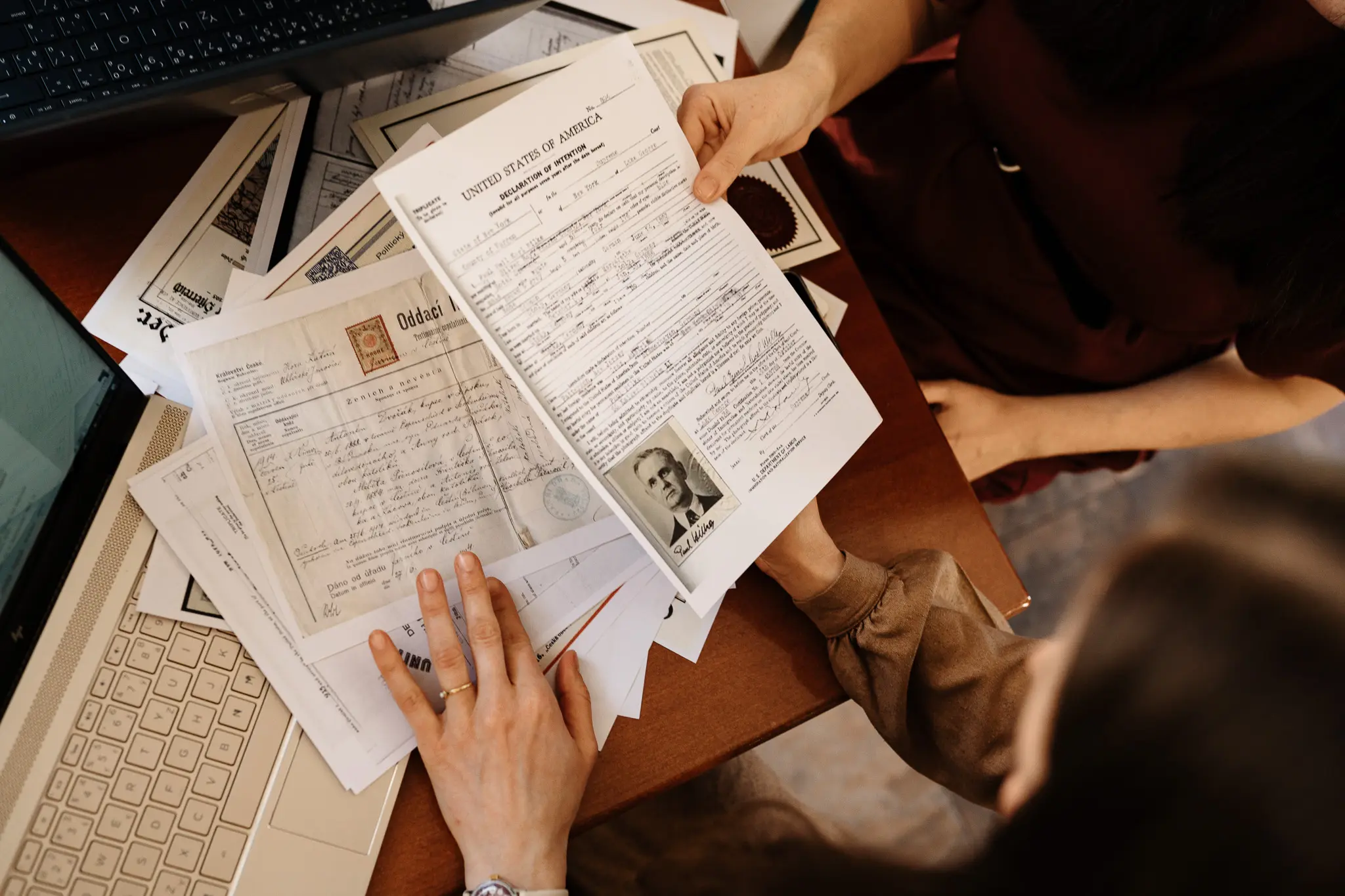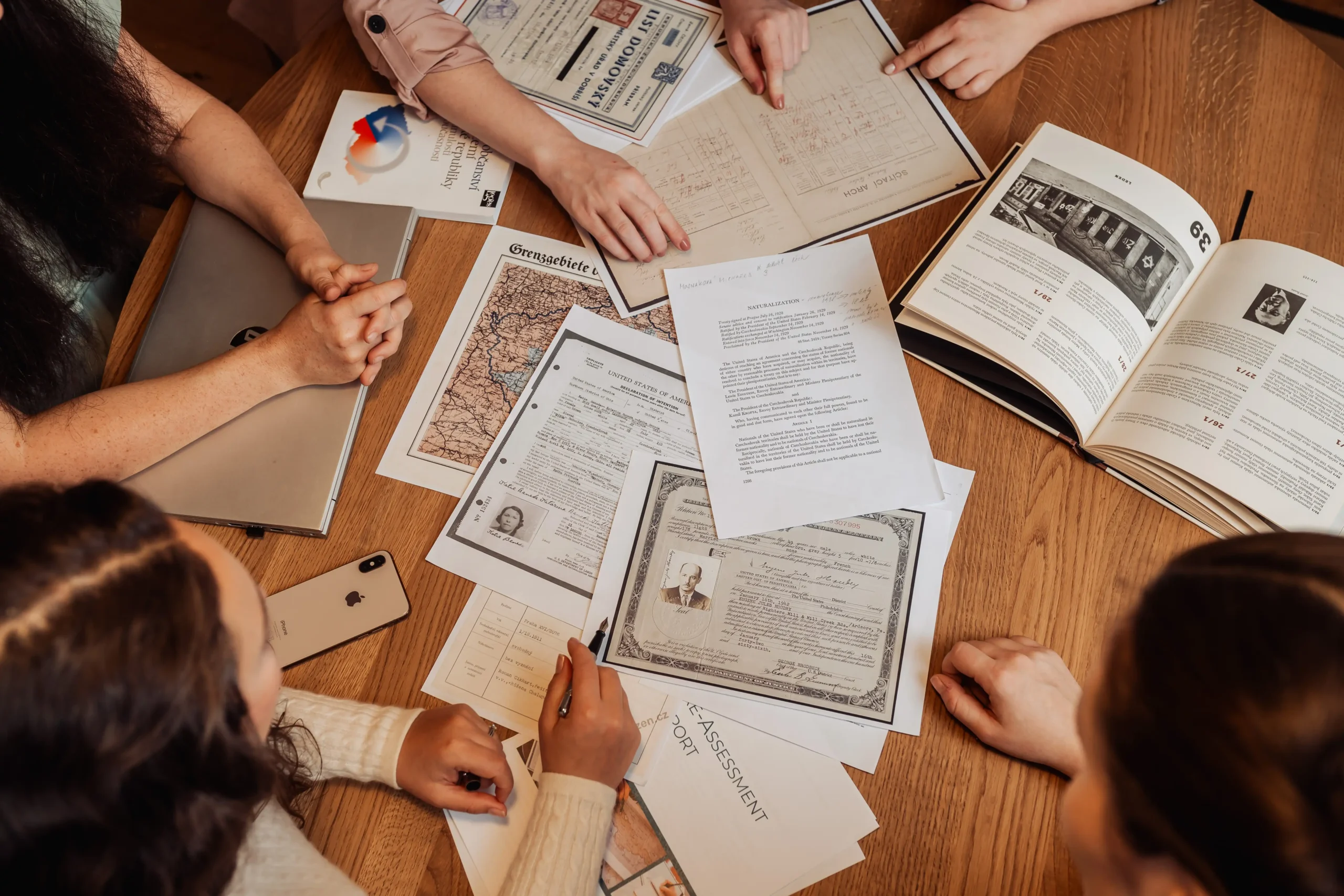
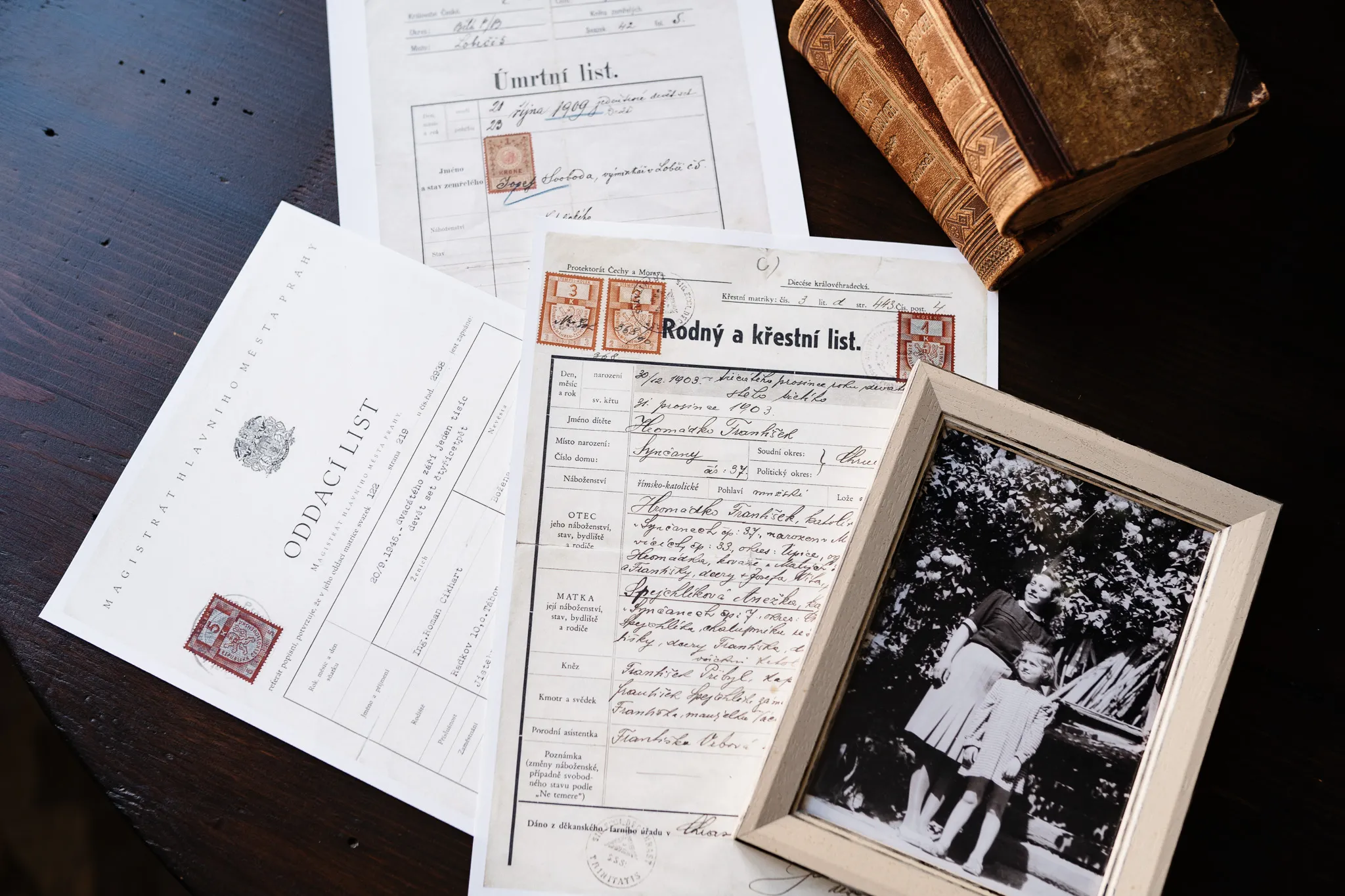

It may appear in old documents from your ancestor such as a population register, or a municipal record. At first glance, it can look like a small administrative detail. For citizenship-by-descent cases, however, it is often a crucial fact.
In some cases, the right of domicile helps explain whether an ancestor had a legally recognized connection to a municipality in the Czech lands and whether that connection may help support a successful Czech citizenship application.
What was “Right of Domicile”?
The institution developed in the Czech lands in the 19th century, and remained in use for a long time. It continued through the First Czechoslovak Republic and was abolished only from January 1, 1949.
Domovské právo (Right of Domicile) was a legal relationship between a person and a particular municipality. Rather, it meant that a person “belonged” to a specific municipality for legal and administrative purposes.
That municipality had certain duties toward them. In particular, it was responsible for poor relief if the person fell into hardship, and persons with domicile right had a right to reside in their municipality – the municipality could not simply expel them from their territory (remember, we are talking about a law from mid 19th century).
How was a right of domicile acquired?
In most situations, a person did not apply for domovské právo in the way one applies for a passport or residence permit today. It was usually acquired automatically, based on parentsormarriage but one could also actively apply for a change of the right of domicile.
The most common ways were:
Birth
A legitimate child usually followed the father’s right of domicile. A child born out of wedlock usually followed the mother’s.
Marriage
A wife generally acquired her husband’s domovské právo upon marriage.
Public office or appointment
Certain public servants and professionals, such as teachers, gendarmes, clergy, doctors, and similar officials, could acquire domicile rights in the municipality connected with their position.
Long-term residence
After legal reforms in the late 19th century, long-term uninterrupted residence could create a claim to domicile in a municipality. Earlier rules were less automatic and often depended on the municipality’s discretion.
This distinction matters in family research. A person’s birthplace and their legal domicile were not always the same. For example, a woman born in one village may have acquired her husband’s right of domicile after marriage and become legally affiliated with a different municipality altogether.
Why does this matter for citizenship today?
For modern citizenship cases, the domicile right matters because it was historically connected to state citizenship.
Under Austro-Hungarian and later Czechoslovak law, municipal affiliation was often part of the framework used to determine whether someone belonged to the state. In other words, citizenship was not assessed only by looking at place of birth or ethnicity. A person’s legal connection to a municipality could also be relevant.
That connection remained important even after the right of domicile was abolished at the end of 1948. Municipalities were required to preserve records of persons who held domicile rights as of December 31, 1948, and earlier domicile rules could still matter where they were relevant to determining Czechoslovak citizenship under older regulations.
For descendants, this can be significant. A domicile record may help show that an ancestor had a recognized legal link to a municipality in the Czech lands. In some cases, that can support the citizenship chain.
This is why domovské právo often comes up in cases involving:
- ancestors who emigrated in the late 19th or early 20th century;
- families who moved between towns, villages, or regions;
- women whose legal status changed through marriage;
- ancestors born in one municipality but legally affiliated with another;
- incomplete or unclear citizenship records.
A birth certificate can tell you where someone was born. It does not always tell you where that person legally belonged.
Where can these records be found?
The most useful document is usually the domovský list — a domicile certificate. If available, it can confirm a person’s municipal affiliation and may be very helpful in a citizenship-by-descent case.
Relevant information may also appear in domicile registers, population registers, municipal files, archive indexes, military or police documents, or other administrative records.
In practice, finding the right record is not always straightforward. Records may be held by different archives depending on the municipality, time period, and type of document. Some are digitized, others are not. Some are indexed by name, while others require manual review.
A small detail that can change the whole case
Domovské právo (right of domicile) may sound like a narrow historical concept, but in citizenship-by-descent research, it can become a key part of the analysis.
If you are unsure whether your family history includes a domicile record that could support your Czech citizenship claim, this is exactly the type of issue we look at during our Archival Research process — before you decide whether to move forward with a full application.