

A missing birthplace reconstructed
That was the case for a client seeking to confirm his paternal ancestors’ origins. At the start, there were no verified birthplaces or marriage records, and names varied across different sources. Our first breakthrough came from parish registers near Jablunkov, where we located a birth record from 1870 for a female ancestor. This corrected earlier inconsistencies and provided a chronological anchor. Following her marriage record in Lázy pod Makytou, we discovered the true identity of her husband, whose name had changed in later records. From there, we traced his birth in the Komárno region, confirming both ancestors’ origins and establishing their residence in the region before 1918.
A diary that unlocked identity
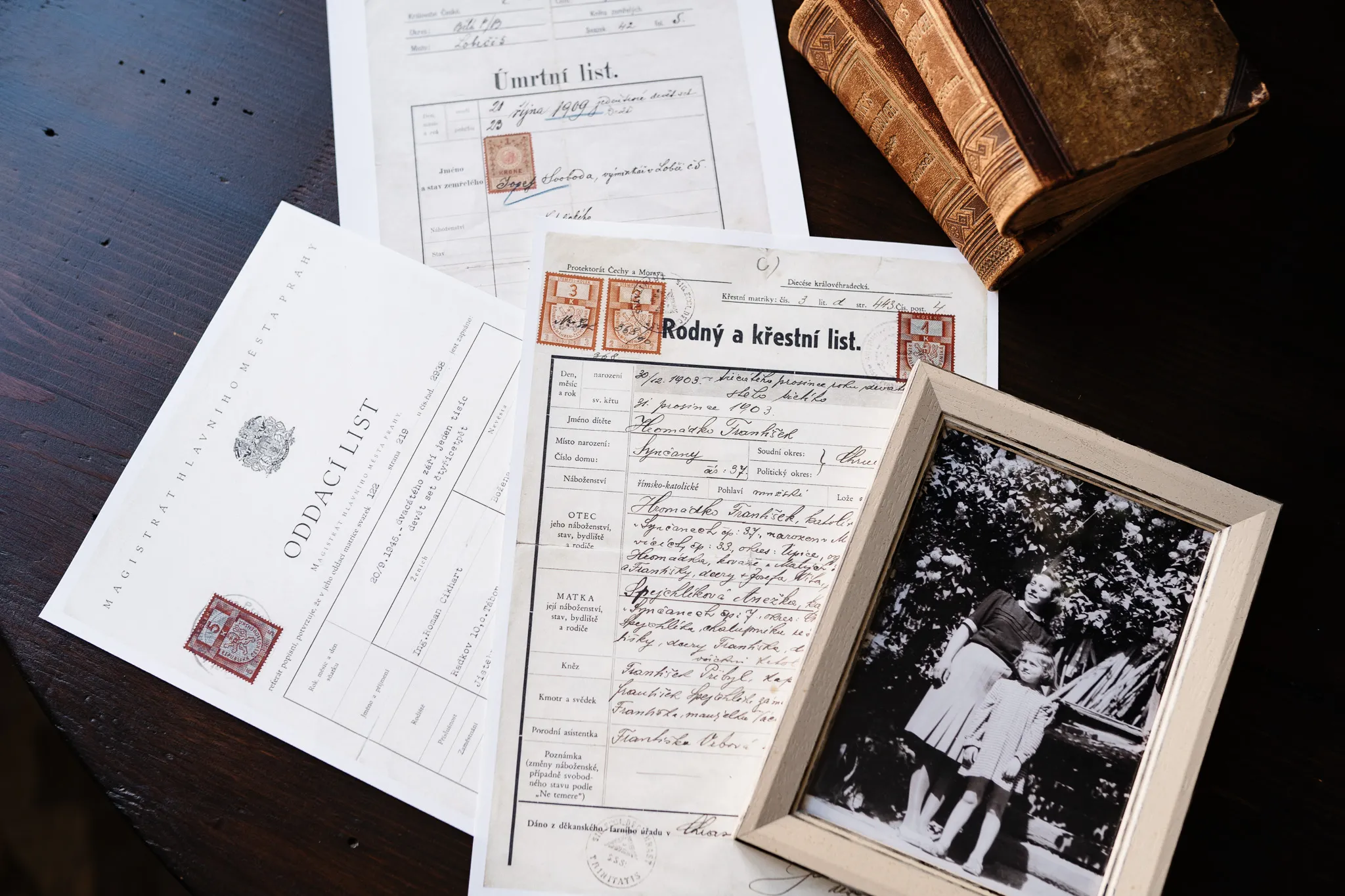
In another case, a seemingly small family artifact, a grandfather’s diary, proved to be a crucial clue. It contained vague notes about a grandmother’s birthplace and baptism, which initially seemed too cryptic to follow. By interpreting these hints and cross-referencing them with parish registers, we were able to locate her birth record and confirm her identity. A few lines in a personal diary had unlocked a key piece of the family puzzle, showing how personal documents can complement official records.
A search redirected by a single clue
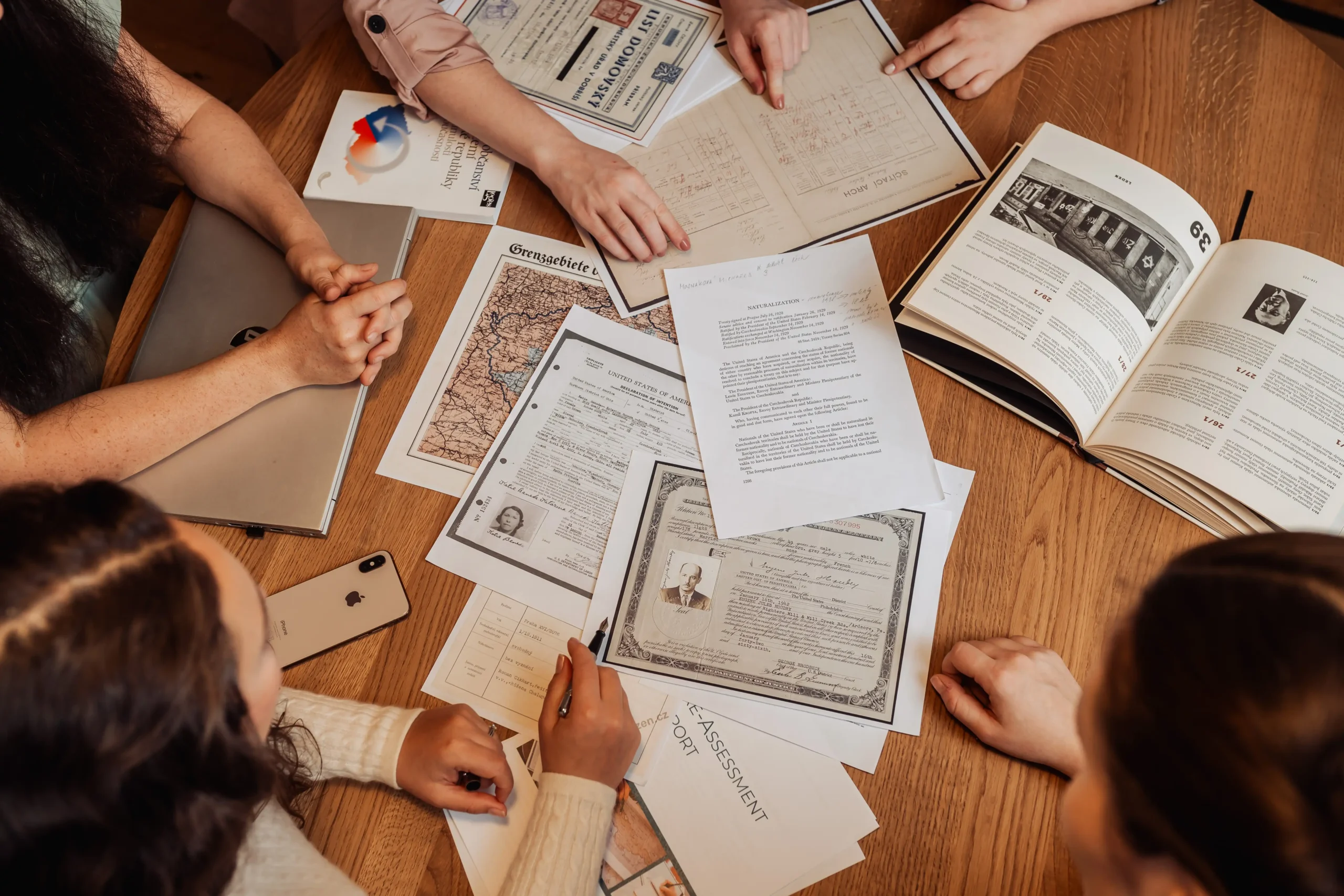
A different project involved Jewish ancestors, where initial searches in standard parish and civil registers led nowhere. The breakthrough came through census sheets: a small handwritten note indicating “Hebrew” revealed the family’s religious background. This single detail redirected the entire investigation. By switching to Jewish community records and specialized archives, we were able to trace several generations of ancestors who had remained invisible in conventional sources.
More Than Documents: The Logic Behind Archival Research
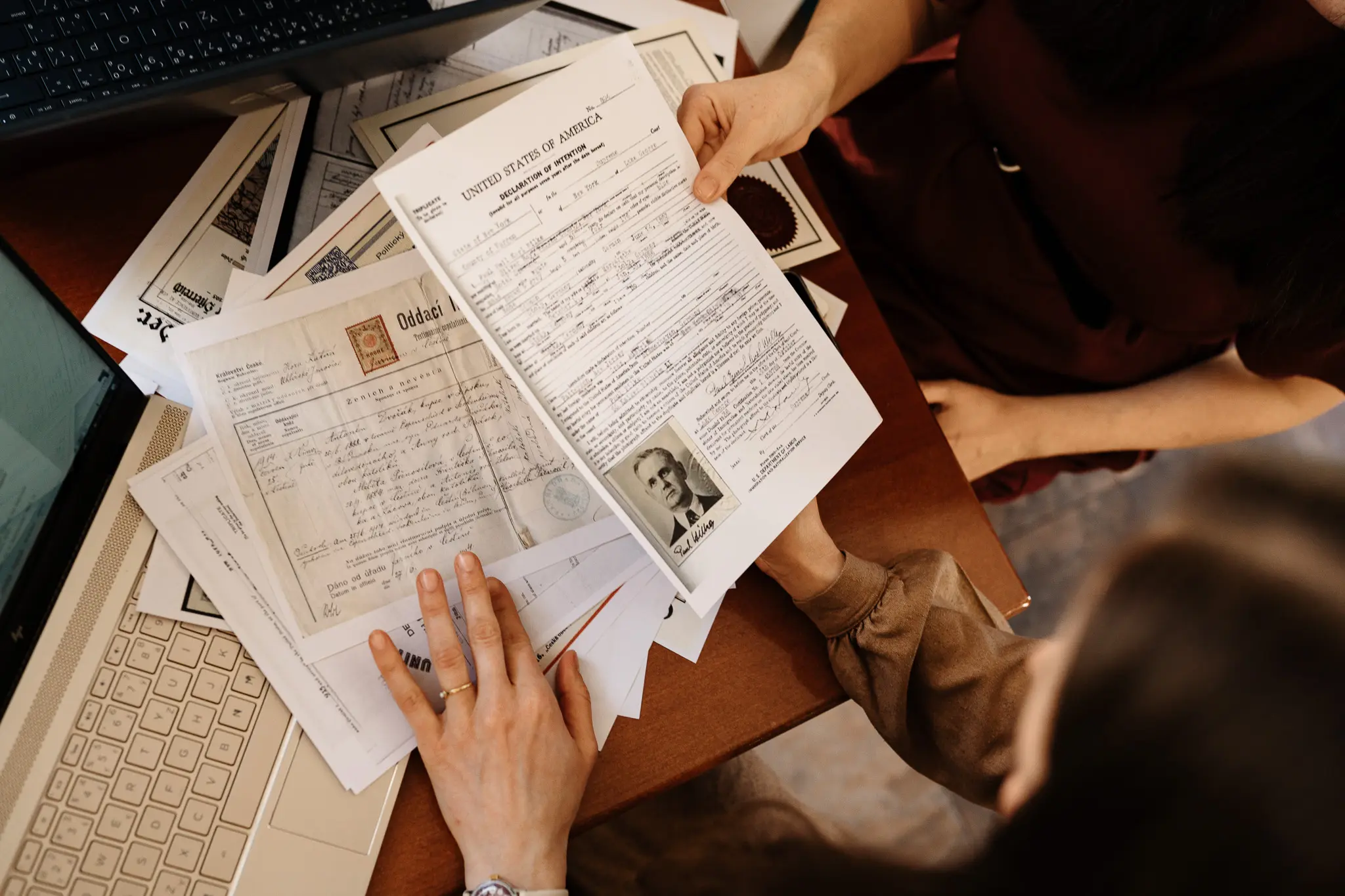
By carefully examining municipal records, parish archives, census sheets, and by cross-referencing every detail, we verified domiciles, corrected discrepancies in spelling and dates, and linked scattered references into coherent narratives. What began as a handful of fragments became clear pictures of family roots, providing both genealogical clarity and historical context.
These cases show that archival research is not only about finding documents – it is about interpreting clues, navigating inconsistencies, and knowing where to look next. Every record, every note, and sometimes even a single word in a census form can open an entirely new chapter of a family’s past.